Engineering of a metal bellows expansion joint does not end when the product leaves the factory. Installation conditions are also important to the performance of the overall piping system.
China's GB/T 35979-2018, Technical Specification for Selection, Installation, Use and Maintenance of Metal Bellows Expansion Joints, remains current. The standard was reviewed on July 1, 2025, with the conclusion that it should remain valid.
The standard specifically addresses selection, installation, use and maintenance.
Expansion Joints Are Not Pipe Supports
An expansion joint is intended to accommodate specified piping movement according to its design.
If significant piping misalignment is corrected by forcibly stretching, compressing or twisting the expansion joint during installation, additional deformation may be introduced before the system is placed in service.
Anchors and Guides Affect Movement
Axial expansion joints are normally considered together with piping anchors and guides as part of the overall movement-control arrangement.
Insufficient guiding may allow the pipe to move in unintended directions, potentially introducing lateral or angular loading that was not part of the original design condition.
Shipping Devices Require Correct Identification
Some expansion joints use shipping bars, temporary restraints, limit devices or permanent tie rods.
Whether a component should be removed, retained or adjusted must be determined from the product drawing and installation instructions.
A visible rod should not automatically be assumed to be a temporary shipping component. In some expansion-joint designs, tie rods are permanent structural or load-carrying parts.
Protect the Bellows During Site Work
For welded installations, care should also be taken to protect thin-wall bellows elements from weld spatter and mechanical damage.
Inspection Before Operation
Before commissioning, the installation may be checked according to project requirements for orientation, connections, anchors, guides, handling of shipping devices and visible product condition.
During operation, unusual deformation, mechanical damage, corrosion or signs of leakage should be assessed according to the applicable maintenance requirements.
Correct selection, proper installation and suitable maintenance are closely connected parts of the same piping-system process.
Source:GB/T 35979-2018, Technical Specification for Selection, Installation, Use and Maintenance of Metal Bellows Expansion Joints.
Note: Actual installation requirements should follow the product drawing, manufacturer instructions, engineering documents and applicable project standards.
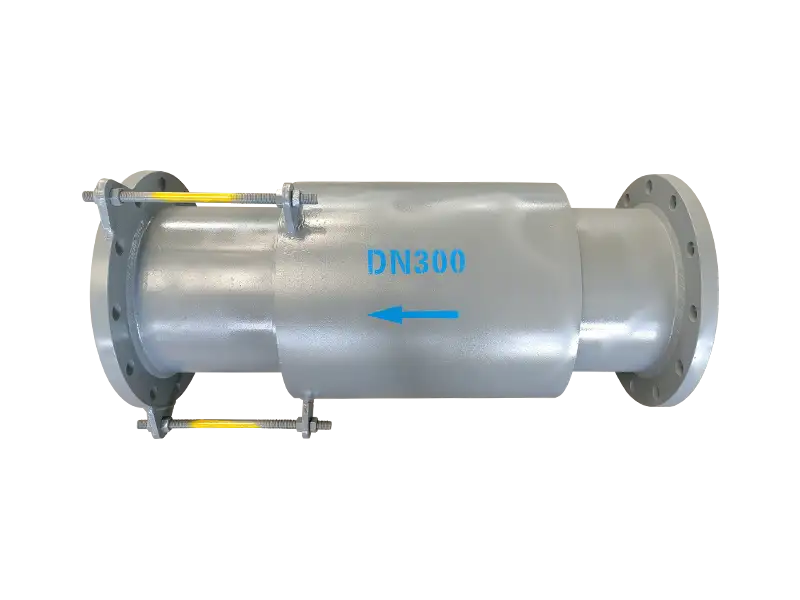
Product example: an externally pressurized axial bellows expansion joint.
For related product information, explore metal bellows expansion joints and the externally pressurized axial bellows expansion joint. Product-specific installation instructions remain essential.
Official record for GB/T 35979-2018